
You’re counting every calorie. You’ve cut back. You’re being strict. And the scale? It’s not moving. If you’ve been eating 1200 calories and not losing weight, you’re not doing it wrong; you might actually be doing too much. That sounds backwards, but it’s one of the most common things we see at NuPharmaLife. This post is going to explain exactly why 1200 calories can stop weight loss, what your body is doing behind the scenes, and what you can try instead.
Why Are You Eating 1200 Calories and Not Losing Weight?
Here’s what most people don’t know: your body is not just a math equation. Yes, calories matter. But your body is also really good at protecting itself. When you drop to 1200 calories, or even lower, your body picks up on it fast. It thinks something is wrong. It thinks food might be running out. So it slows everything down to save energy.
This is called metabolic adaptation. Your metabolism basically shifts into a lower gear. It burns less fuel at rest, reduces how much energy you use during movement, and holds onto body fat like it’s precious [1] . So even though you’re eating less, your body is spending less, too. The gap between what you eat and what you burn gets smaller. Weight loss stops.
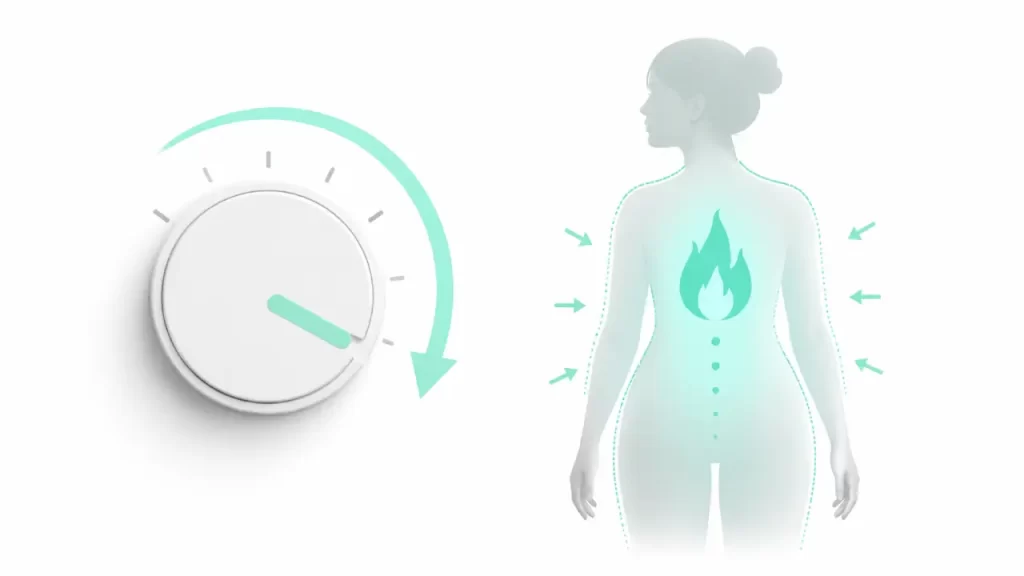
It’s not a flaw in you. It’s your body being incredibly smart, just at the wrong time. Scientists at the National Institutes of Health have studied this response closely and found that even moderate calorie restriction can trigger significant drops in resting metabolic rate [1]. The longer you stay at a very low calorie level, the stronger this effect gets.
What Actually Happens to Your Body When You Eat Too Little?
Think of your metabolism like a thermostat. When the house is warm, it stays on a certain setting. But if you suddenly cut the heat, it adjusts, it turns things down to hold whatever warmth is left. Your body does the same thing with calories.
When you’ve been eating 1200 calories and not losing weight for weeks, a few things have likely happened inside your body. Your thyroid, which controls how fast your metabolism runs, slows its output. Your hunger hormones, especially one called ghrelin, spike up [2]. That’s why you feel more hungry, not less, the longer you stay on a strict diet. And your fat-burning hormones drop at the same time.
Plus, at very low calorie levels, your body doesn’t just burn fat, it starts breaking down muscle too. Less muscle means a slower metabolism. So not only are you burning less, you’re also losing the tissue that would help you burn more in the future. It’s a double loss, and most people don’t realize it’s happening.
If this sounds familiar, you might want to read our post on eating less and still gaining weight, it covers this exact frustration in more detail.
GLP-1 Prescription Program
Does Exercise Make Things Worse When You’re Already at 1200 Calories?
A lot of people figure: if 1200 calories isn’t working, let me add exercise on top of that. And that seems logical. But if you’re already in a very low-calorie state, adding more exercise without eating more can push your body deeper into that protective mode. Your body becomes even more efficient. It burns even less. Weight loss can actually stall harder.
If you’re eating a 1200-calorie diet and exercise still isn’t producing weight loss, it’s not that exercise is useless. It’s that the combination of too few calories plus too much activity is a stress signal your body doesn’t like. Studies show that when the body experiences this kind of energy stress, it lowers something called NEAT, non-exercise activity thermogenesis [3]. That’s the energy you burn from everyday things like walking around, fidgeting, and taking the stairs. Your body quietly reduces all of that to compensate for the deficit.
The fix isn’t always to cut more. Sometimes it’s to eat a little more strategically, so your body feels safe enough to let go of fat. We walk through some of those strategies in our post on weight management strategies for busy lifestyles.
What Are the Other Hidden Reasons a 1200 Calorie Diet Stops Working?
Sometimes the calorie count isn’t the whole story. Even if you’re measuring perfectly, there are other things that quietly work against weight loss. Here’s a quick look at what we often see:
| Hidden Factor | What It Does | What to Do |
|---|---|---|
| Stress / Cortisol Spike | High cortisol tells your body to store fat, especially around the belly. | Prioritize sleep, reduce overtraining, and manage daily stress. |
| Poor Sleep | Sleep loss raises hunger hormones by up to 24% [4] . | Aim for 7–9 hours. Sleep is part of weight loss. |
| Calorie Miscounting | Oils, sauces, and drinks add up fast and often go untracked. | Weigh food with a scale instead of estimating portions. |
| Plateau from Long Restriction | The body adapts to lower calorie intake over time. | Consider a 1–2 week diet break at maintenance calories. |
| Medical Causes | Thyroid issues, insulin resistance, and PCOS may slow weight loss. | Get bloodwork done to rule out underlying conditions. |
| Water Retention | Stress, sodium, and hormones can temporarily affect the scale. | Give it 2–3 weeks before judging actual fat loss progress. |

I, Dr. Heifitz, often tell patients, ‘The number on the scale is a report card with missing pages. You need to look at the full picture, not just calories in, calories out.’
What Should You Actually Eat to Start Losing Weight Again?
Instead of going lower, think about going smarter. Dropping to 800 or 900 calories when 1200 isn’t working is almost never the right move. Your body is already in protective mode. Going lower just deepens the problem.
What tends to actually help is eating more protein. Protein keeps you full longer, it preserves muscle mass during a calorie deficit, and your body burns more energy just to digest it. Research from the NIH shows that higher protein diets help protect lean muscle during weight loss, which keeps your metabolism from dropping as fast [5]. Aim for protein at every single meal, not just dinner.
Also, think about where your calories are coming from. 1200 calories of crackers and fruit hits your body very differently than 1200 calories of eggs, chicken, vegetables, and olive oil. The quality of food affects how full you feel, how steady your blood sugar is, and how likely your body is to store vs. burn. For more practical tips on this, check out our guide on managing your diet while using GLP-1 medications, many of those principles apply even if you’re not on medication yet.
When Is It Time to Actually Talk to a Doctor About Your Weight Loss?
If you’ve been eating 1200 calories, or even under that, for more than 8 to 12 weeks with little to no result, that’s a signal worth taking seriously. It’s not a willpower problem. It’s a biology problem. And sometimes, biology needs medical support.
This is where GLP-1 medications like semaglutide and tirzepatide come in. These are prescription medications that work with your hunger and blood sugar hormones directly. They help reduce appetite, slow down how fast food leaves your stomach, and support your body in actually using fat for energy. Clinical trials have shown that patients on semaglutide lost an average of 15% of their body weight, significantly more than diet alone [1].
They’re not magic. They work best with the right food choices and some movement. But for people who’ve been stuck at 1200 calories and not losing weight despite doing everything right, they can be the thing that finally breaks the plateau. If you’re curious whether weight loss injections might be right for your situation, we have a full breakdown at are weight loss injections the right option for you.
Frequently Asked Questions
1. Can you really not lose weight at 1200 calories?
Yes, it’s very possible. When you’ve been at 1200 calories for a while, your metabolism adjusts and burns less to match your intake. This is called metabolic adaptation, and it’s a completely normal biological response, not a personal failure.
2. Is 1200 calories too low for weight loss?
For many adults, yes. 1200 calories is already at the lower edge of what most nutrition experts consider safe for women, and it’s too low for most men. Going below that without medical supervision is usually counterproductive and can cause muscle loss, fatigue, and nutrient deficiencies.
3. Why am I gaining weight on 1200 calories?
This can happen for a few reasons: hormonal imbalances like hypothyroidism or PCOS, water retention from stress or sodium, or losing muscle mass (which slows your burn rate) from being on very low calories too long. A doctor can help figure out what’s actually going on with bloodwork and a proper evaluation.
4. How long should I stay at 1200 calories before changing my approach?
If you’ve been at 1200 calories for more than 8 to 12 weeks without meaningful progress, it’s time to change the approach. Staying stuck longer won’t help. Talk to a doctor about options, including whether your calorie level, food quality, or a medical aid like GLP-1 therapy makes sense for you.
5. Does exercising on 1200 calories help or hurt weight loss?
It depends. Light to moderate exercise can help preserve muscle and improve mood. But intense exercise on top of a very low-calorie diet often backfires; your body slows its other activity (NEAT) to compensate. If you’re exercising and not losing weight on 1200 calories, focus on eating enough protein and consider whether a slightly higher calorie target might actually work better.
6. Can a GLP-1 medication help if 1200 calories haven’t worked?
For many people, yes. GLP-1 medications like semaglutide work by directly targeting the hunger and blood sugar hormones that make weight loss so hard. If you’ve been stuck despite a low-calorie diet and exercise, a licensed doctor at NuPharmaLife can evaluate whether a GLP-1 prescription is right for you.
7. Is it safe to eat under 1200 calories?
Going under 1200 calories regularly, especially without medical supervision, puts you at risk for nutrient deficiencies, muscle loss, slowed metabolism, and fatigue. It’s not a safe or effective long-term strategy. If you feel you need to go that low to see results, please talk to a doctor first.
The Bottom Line
Eating 1200 calories and not losing weight is one of the most frustrating experiences in the weight loss world. But it’s also one of the most explained. Your body is not broken; it’s protecting itself. The fix isn’t to eat even less. It’s to understand what’s happening and approach weight loss in a way that works with your biology, not against it.
If you’ve been eating 1200 calories and still not losing weight, don’t keep doing the same thing and hoping for a different result. Talk to a doctor. Get a real plan. At NuPharmaLife, our licensed physicians can help you figure out what’s blocking your progress and whether a medically supported approach is right for you.
References
- [1] Wilding JPH, et al. “Once-Weekly Semaglutide in Adults with Overweight or Obesity.” NEJM. 2021. View Study
- [2] Sumithran P, et al. “Long-Term Persistence of Hormonal Adaptations to Weight Loss.” NEJM. 2011. View Study
- [3] Rosenbaum M, Leibel RL. “Adaptive thermogenesis in humans.” Int J Obes. 2010. Read Article
- [4] Spiegel K, et al. “Sleep loss: a novel risk factor for insulin resistance and Type 2 diabetes.” J Appl Physiol. 2005. View Research
- [5] Leidy HJ, et al. “The role of protein in weight loss and maintenance.” Am J Clin Nutr. 2015. View Study
This article is for informational and educational purposes only and is not a substitute for professional medical advice, diagnosis, or treatment. Always consult with a licensed healthcare provider before starting any new medication or treatment program. NuPharmaLife connects patients with US-licensed physicians who make all prescribing decisions independently based on individual medical evaluations.
Last reviewed: May 2026