
Key Takeaways
- Acute illness in children starts quickly, usually from a virus, bacterial infection, or injury, and lasts days to a few weeks with proper care.
- Children are more vulnerable than adults because their immune systems are still developing, meaning symptoms can escalate faster.
- Warning signs vary significantly by age: a fever in a newborn is always an emergency; the same temperature in a 7-year-old may be watchable at home.
- Certain symptoms, such as difficulty breathing, a non-blanching rash, unresponsiveness, or a stiff neck with high fever, require an immediate trip to the emergency room, no exceptions.
Acute illness in children is any health condition that starts suddenly and lasts a short time, typically a few days to a few weeks. Unlike a chronic condition like asthma or diabetes that sticks around long-term, an acute illness hits fast and, with the right care, usually resolves completely.
Here’s the thing: Parents often mix these two up, and that confusion matters. If you treat every illness like it’ll pass on its own, you might miss something that needs medical attention. And if you panic at every sniffle, you’ll be at the pediatrician’s office every other week.
Understanding what “acute” actually means gives you a clearer framework for deciding what to do and when.
Why Do Children Get Acute Illnesses More Often Than Adults?
Kids get sick more often than adults; that’s not just your imagination. A child’s immune system is still learning. It’s building its library of antibodies and infection-fighting responses from scratch. Until that library fills up (which takes years), children are more susceptible to viruses, bacterial infections, and everything else floating around in the air at a daycare or classroom.
The average healthy child gets 6 to 8 respiratory illnesses a year. That sounds alarming, but it’s actually their immune system doing exactly what it’s supposed to: encountering pathogens, fighting them off, and getting stronger in the process.
What’s the Real Difference Between Acute and Chronic Illness in Children?
This question comes up a lot, and the comparison matters for how you manage your child’s care. Here’s a simple breakdown:
| Feature | Acute Illness | Chronic Condition |
|---|---|---|
| Onset | Sudden, hours to days | Gradual, weeks to months |
| Duration | Days to a few weeks | Months to years |
| Cause | Virus, bacteria, injury | Genetics, lifestyle, and immune dysfunction |
| Outcome | Usually full recovery | Managed, not cured |
| Treatment | Short-term (antibiotics, rest, fluids) | Ongoing (medication, therapy, monitoring) |
| Examples | Flu, strep throat, ear infection | Asthma, diabetes, eczema |
Most acute illnesses are caused by viruses, such as flu, RSV, or the common cold, or bacterial infections like strep throat or ear infections. Injuries, allergic reactions, and exposure to environmental triggers round out the list.
What Are the Most Common Symptoms of Acute Illness in Children?
This is where parents need to pay close attention. Symptoms of acute illness in children aren’t always obvious, and children, especially young ones, can’t always tell you what’s wrong. You’re reading the signs.
Is That Fever Something to Worry About?
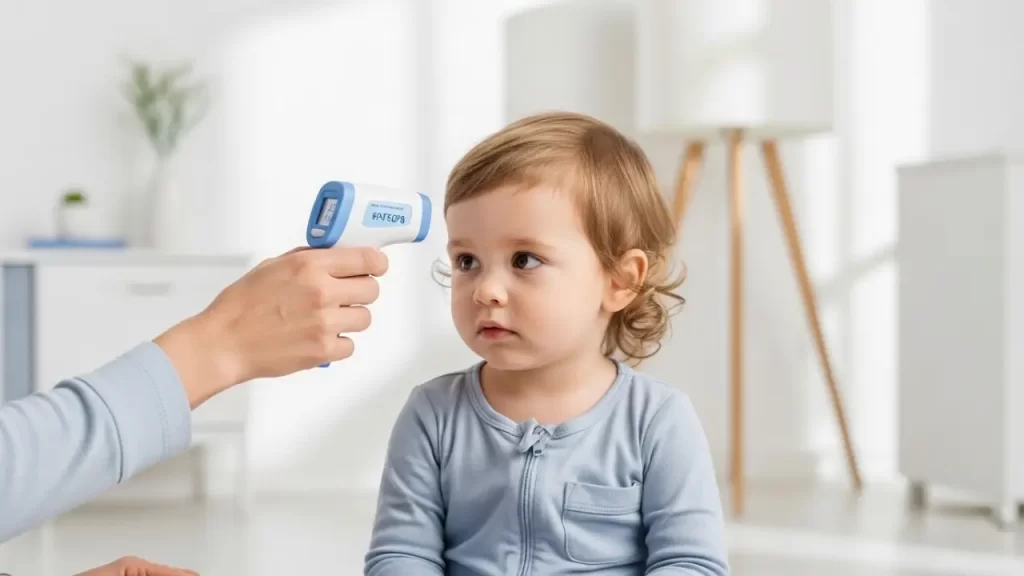
Fever is the body’s defense mechanism, not the enemy. When your child’s temperature rises, it means their immune system is actively fighting something. But the number on the thermometer alone doesn’t tell the whole story; context matters enormously.
A temperature above 100.4°F (38°C) is officially a fever. But what that means depends on your child’s age. A 2-month-old with a 100.5°F fever needs immediate medical evaluation. A healthy 6-year-old with the same reading, who’s still running around and drinking juice, can often be monitored at home.
What makes a fever more concerning isn’t always how high it is; it’s what comes with it. Fever plus difficulty breathing, fever plus a stiff neck, or fever plus extreme lethargy change everything.
What Do Respiratory Symptoms Actually Look Like?
Respiratory symptoms in children often start mild but can worsen quickly, especially under age two. Common signs include coughing, congestion, and a runny nose. A regular cough that comes and goes is usually harmless, but a deep, barking cough, especially at night, may indicate croup.
Wheezing, a whistling sound while breathing out, suggests narrowed airways, while rapid breathing can mean the child is struggling to get enough air. Knowing normal breathing rates helps identify danger: newborns (40–60 breaths/min), toddlers (24–40), and school-age children (18–30). Faster rates may need medical attention.
Gastrointestinal symptoms like vomiting, diarrhea, and stomach pain are common and often linked to infections like gastroenteritis. The biggest concern is dehydration. Warning signs include dry mouth, no tears, reduced urination, sunken eyes, and unusual tiredness. Persistent vomiting and inability to keep fluids down require medical care.
Skin changes can also signal illness. While a flushed face with fever is normal, a sudden rash with fever needs evaluation. A rash that doesn’t fade when pressed can indicate a serious condition and requires immediate care.
Behavioral changes are key indicators, too. Unusual quietness, lethargy, inconsolable crying, refusal to drink, or sensitivity to light may signal serious illness and should not be ignored.
How Do Symptoms Differ by Age Group? A Guide for Every Stage
Age plays a critical role in how symptoms of acute illness appear and how urgently they should be treated. What may be mild in an older child can be serious in a younger one, especially in newborns. Understanding these differences helps parents respond appropriately.

Newborns (0–3 Months): Highest Risk Group
Newborns are extremely vulnerable due to underdeveloped immune systems. Even minor symptoms can escalate quickly.
Key Warning Signs:
- Any fever ≥ 100.4°F (38°C) → Immediate ER visit
- Bulging fontanelle (soft spot)
- Poor feeding
- Floppiness or limpness
- High-pitched or unusual cry
- Labored breathing
Important: Fever in this age group is always a medical emergency.
Infants (3–12 Months): Growing but Still Vulnerable
At this stage, babies begin developing immunity, but risks remain.
Common Concerns:
- A fever of around 102°F should be evaluated
- Ear infections (very common)
Signs of Ear Infection:
- Tugging at ears
- Irritability or crankiness
- Increased night waking
- Fever
Other Red Flags:
- Refusal to breastfeed or take a bottle
Toddlers (1–3 Years): Frequent Illness Phase
Toddlers are exposed to more germs, especially in daycare settings.
What to Expect:
- Frequent infections (normal)
Critical Condition: Febrile Seizures
- Triggered by a rapid fever rise
- Symptoms: shaking, stiffening, brief unconsciousness
Seek Emergency Help If:
- Seizure lasts > 5 minutes
- Happens more than once in 24 hours
- Breathing difficulty follows
Other Warning Signs:
- Refusal to walk or bear weight
School-Age Children (4–12 Years): Better Communication, Hidden Risks
Children can explain symptoms but may downplay them.
Key Conditions to Watch:
- Strep throat symptoms:
- Severe sore throat
- Fever
- Swollen lymph nodes
- Sandpaper-like rash
- Serious Warning Signs:
- Severe headache with fever (possible meningitis)
- Joint pain/swelling with fever
Emergency Warning Signs: When to Go to the ER Right Now
Some symptoms skip the “call the doctor” step entirely. These are the signs that mean go now, not after a phone call, not in the morning.
Breathing Emergencies
If your child is struggling to breathe, that’s always an emergency. Specifically: breathing that looks labored, nostrils flaring, ribs visibly pulling in with each breath (called retractions), grunting sounds, or a child who has to sit up or lean forward to breathe. Blue or grayish coloring around the lips or fingertips (cyanosis) means the body isn’t getting enough oxygen.
Neurological Emergencies
A seizure that hasn’t stopped after 5 minutes, or a first-time seizure with no known history of febrile seizures, is an emergency. A child who is unresponsive or extremely difficult to wake, especially with a fever, needs immediate evaluation.
A stiff neck combined with high fever and light sensitivity is one of the most important warning signs of bacterial meningitis. And any child who describes a headache as “the worst ever” or different from any headache they’ve had before needs to be seen right away.
Dehydration Emergencies
No urination in 8 or more hours is a critical dehydration signal. Add sunken eyes, no tears when crying, an infant’s sunken fontanelle, and extreme lethargy, and that child needs IV fluids. Don’t try to push fluids at home if your child has been vomiting everything for 12+ hours. They can’t absorb it.
The Rash Emergency
Remember the glass test. If you press a clear glass against a rash and the spots are still visible through the glass, that’s a non-blanching rash, and it’s a potential emergency. It can indicate meningococcal disease, which can deteriorate extremely rapidly. Don’t wait to see if it gets better.
The Most Common Acute Illnesses in Children and What They Look Like
Knowing the specific patterns of common childhood acute illnesses helps you identify what you might be dealing with and respond appropriately.

Influenza (the flu) hits fast and hard. Unlike a cold that sneaks in gradually, flu typically starts with a sudden high fever (often 102–104°F), significant body aches, extreme fatigue, headache, and a dry cough. Children feel dramatically worse than they do with a cold. Antiviral medication like oseltamivir (Tamiflu) is most effective when started within 48 hours of symptom onset.
Strep throat is a bacterial infection, and one of the few common childhood illnesses that genuinely needs antibiotic treatment. Classic signs include a high fever, a severely sore throat (often with white patches or red spots on the tonsils), swollen lymph nodes in the neck, and sometimes a rough sandpaper rash on the torso (scarlet fever). Strep doesn’t usually cause a runny nose; if you’re seeing that alongside a sore throat, it’s more likely viral.
RSV (respiratory syncytial virus) and bronchiolitis are particularly important to know about for children under 2. RSV is a common virus that causes cold-like symptoms in older children and adults, but in babies and toddlers, it can infect the small airways of the lungs (bronchiolitis) and cause significant breathing difficulty. Wheezing, rapid breathing, and poor feeding in a young infant during RSV season (typically fall through spring) should prompt a call to the doctor.
Ear infections are one of the most common reasons parents take their children to the doctor. Most develop after a viral upper respiratory infection, fluid builds up behind the eardrum, and it becomes infected. Signs include ear pain (often presenting as ear tugging in infants), fever, increased night-time crying, and sometimes fluid draining from the ear. Not all ear infections need antibiotics; your doctor will assess.
Croup produces one of the most alarming sounds in pediatric medicine: a distinctive barking cough that sounds like a seal, often worse at night. It’s caused by swelling around the larynx and is most common in children aged 6 months to 3 years. Mild croup can often be managed at home with cool night air. Stridor, a high-pitched, rough sound when breathing in, that isn’t improving, means a trip to the doctor or urgent care.
Gastroenteritis (the stomach bug) usually announces itself dramatically with sudden vomiting, often followed by diarrhea. Most cases are viral and resolve within 1 to 3 days. The management is all about hydration, small sips of oral rehydration solution rather than large amounts of water or juice.
If you’re trying to understand related stomach issues too, you can also check out acid reflux symptoms and treatment to see how it’s different and what helps.
Can an Acute Illness Turn Into a Chronic Condition in Children?
Most acute illnesses in children, like colds, stomach bugs, or mild infections, go away completely and don’t cause long-term problems. So in most cases, there’s nothing to worry about.
However, if a child gets sick very often, has unusually severe infections, or takes a long time to recover, it could be worth looking deeper. Sometimes, frequent illnesses can point to an underlying issue like a weaker immune response.
In some cases, repeated symptoms can reveal, not cause, an existing condition. For example, frequent wheezing during infections may later lead to an asthma diagnosis. The illness didn’t create asthma; it just helped identify a pre-existing tendency.
The key is patterns. If your child has more infections than expected, struggles to recover, or shows the same symptoms repeatedly, it’s a good idea to discuss it with a doctor.
That said, the reassuring reality is this: most children who get sick often in their early years grow out of it and develop a normal, healthy immune system over time.
Frequently Asked Questions About Acute Illness in Children
1. How long does acute illness last in children?
Most acute illnesses in children resolve within 7–10 days. Common colds usually last about a week, the flu typically causes 5–7 days of noticeable symptoms, and ear infections often improve within 2–3 days once treatment begins. If your child shows no improvement after 10 days, it’s a good idea to consult a doctor.
2. What’s the difference between acute and chronic illness in children?
Acute illnesses start suddenly and last for a short period, usually days to weeks, while chronic conditions develop gradually and persist for months or years, requiring ongoing care. A child can experience both, such as having chronic asthma and also dealing with a sudden acute asthma attack or a short-term infection like an ear infection.
3. What temperature is too high for a child?
For babies under 3 months, any temperature of 100.4°F (38°C) or higher is an emergency. For infants aged 3–6 months, a fever above 102°F should prompt a doctor’s call. In older children, how the child behaves matters more than the exact number; an active, responsive child with a high fever may be less concerning than a lethargic child with a lower fever.
4. Should I send my child to school if they have a fever?
No, children should not go to school with a fever. They should be fever-free for at least 24 hours without using fever-reducing medication before returning. This helps ensure they are fully recovered and reduces the risk of spreading illness to others.
5. How do I know if my child is dehydrated?
Early signs of dehydration include no tears when crying, a dry or sticky mouth, and reduced urination (such as fewer wet diapers or no urination for 8 or more hours). More serious signs include sunken eyes and unusual tiredness. If you notice multiple signs, it’s important to contact a doctor.
6. Is COVID-19 considered an acute illness in children?
Yes, COVID-19 is considered an acute illness in children, as it has a clear onset and usually resolves within 1–2 weeks. Most children experience mild to moderate symptoms like fever, cough, fatigue, or digestive issues. However, in rare cases, it can lead to a serious condition called Multisystem Inflammatory Syndrome in Children (MIS-C), which requires urgent medical care.
7. When should I worry about a cough in a child?
A cough lasting less than three weeks during a common cold is usually not a concern. However, you should consult a doctor if the cough disrupts sleep or eating, sounds like a barking cough with breathing difficulty, includes wheezing, is accompanied by a high fever for more than three days, or occurs in an infant under 3 months old.
Medical Disclaimer: This blog post is for informational and educational purposes only. It is not intended as medical advice, diagnosis, or treatment. Always consult with a qualified healthcare professional before making any changes to your diet, medications, or health routine.